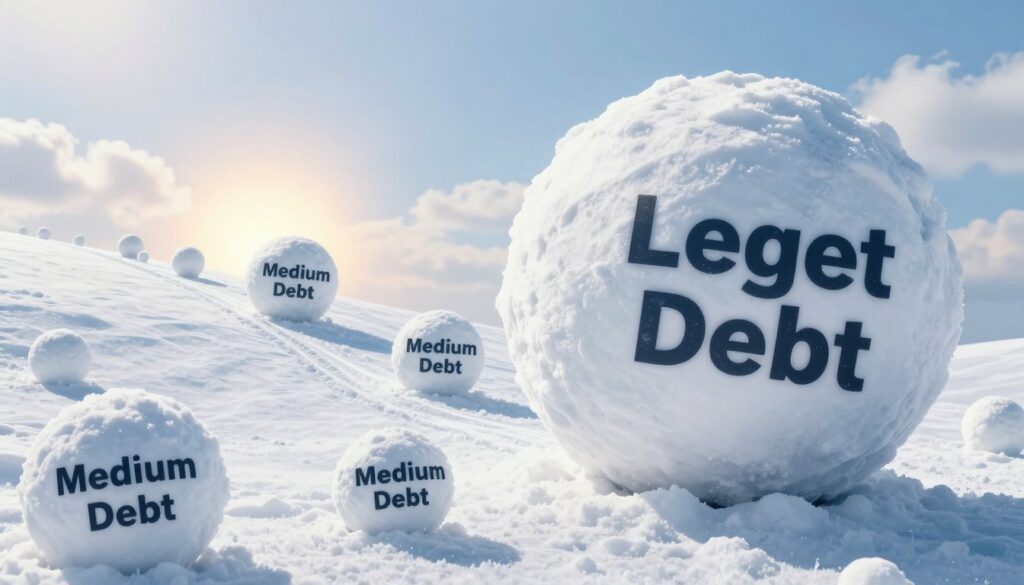
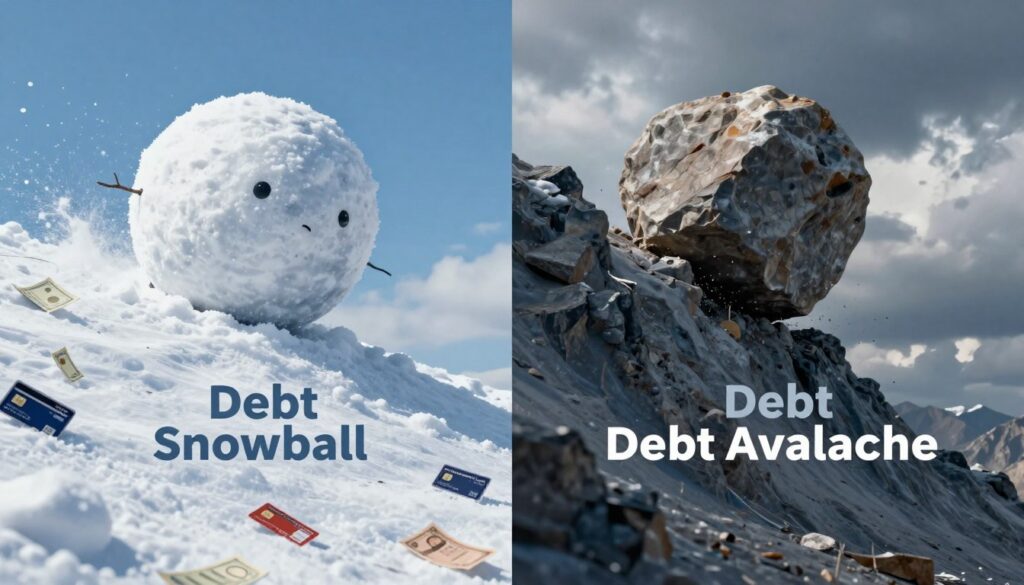
Choosing the right way to pay off debts is key. Two popular methods are often compared. One focuses on high-interest debts first. The other aims to clear smaller balances to keep you motivated.
The avalanche method saves more money by tackling high-interest debt first. On the other hand, the snowball method gives quick wins by paying off smaller debts. This helps keep you motivated as you work to pay off your debts.
It’s important to know the differences between these methods. This will help you decide which is better for your situation. By comparing the debt snowball and avalanche methods, you can make a smart choice and manage your debts effectively.
Understanding Debt Repayment Strategies
Effective debt repayment is key to financial stability. Knowing the right strategies is crucial. It’s important to compare debt payoff strategies to find the best one for you.
The Importance of Having a Structured Approach
A structured debt repayment plan keeps you focused and motivated. It helps avoid the confusion of unorganized payments. As financial expert Dave Ramsey once said, “A budget is telling your money where to go instead of wondering where it went.” This shows the value of a structured plan for managing finances and debt.
Common Challenges in Debt Repayment
Many face challenges when repaying debt. High interest rates, multiple debts, and the emotional burden of debt are common. Debt repayment techniques analysis can help find ways to overcome these issues. For example, consolidating debt into one loan with a lower interest rate can make payments easier and reduce stress.
The Impact of Interest Rates on Total Debt
Interest rates greatly affect the total amount paid over time. Higher rates mean more money goes to interest, increasing the debt. As
“The cost of not dealing with debt is far higher than the cost of dealing with it.”
Knowing how interest rates impact debt helps choose the best repayment strategies. This knowledge is vital for achieving financial stability and becoming debt-free.
What is the Debt Snowball Method?
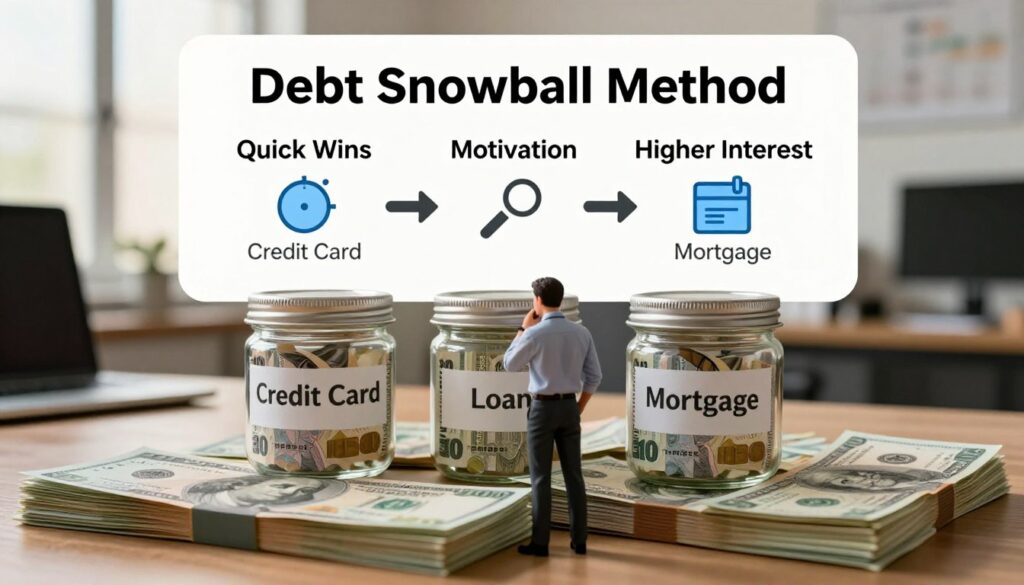
The debt snowball method is a simple way to pay off debts. It starts with the smallest debt first. While you focus on that, you make minimum payments on the rest.
Core Principles of the Snowball Method
This method builds momentum by quickly clearing small debts. It boosts your confidence and motivation as you see progress. Paying off the smallest debt first gives you a big win.
Step-by-Step Implementation
First, list all your debts from smallest to largest. Pay off the smallest one aggressively while making minimum payments on others. Once it’s paid, move to the next smallest debt. Keep going until all debts are gone.
The Psychology Behind the Snowball Method
The debt snowball method works because of its psychological benefits. Quick wins keep you motivated and focused. It helps you feel like you’re making progress, even when the debt seems huge.
Dave Ramsey’s Influence on the Snowball Method
Dave Ramsey is a big name in personal finance who supports the debt snowball method. He stresses the need for behavioral change and motivation to become debt-free. His plan includes not just paying off debts but also changing how you spend money.
When looking at debt snowball vs avalanche repayment plan, think about both the psychological and financial sides. The snowball method gives you quick wins, but the avalanche method might save you money on interest. Knowing these differences helps you pick the best plan for you.
What is the Debt Avalanche Method?
The Debt Avalanche Method is a smart way to manage debt. It focuses on paying off debts with the highest interest rates first. This method helps you save money on interest over time.
Core Principles of the Avalanche Method
This method puts debts with the highest interest rates first. It’s great for saving on interest payments. You need to stick to a plan, paying off one debt at a time while keeping up with others.
Step-by-Step Implementation
First, list all your debts and their interest rates. Sort them from highest to lowest. Then, pay off the debt with the highest interest rate first. Make minimum payments on the others. Once one debt is paid, move to the next.
The Mathematical Advantage of the Avalanche Method
The Debt Avalanche Method saves you money on interest. By focusing on high-interest debts, you cut down on interest payments. This can lead to big savings, especially for those with high-interest debts.
Financial Experts Who Advocate for the Avalanche Method
Many financial experts back the Debt Avalanche Method. Nitzan Mekari, a personal finance expert, says it’s good for saving money. It’s a smart, cost-effective way to pay off debt.
Debt Snowball vs Avalanche: Key Differences
It’s important to know the differences between debt snowball and avalanche methods. Each has its own way to tackle debt. The best choice depends on your financial situation and what you prefer.
Ordering of Debt Repayment
The main difference is how you pay off debts. The debt snowball method starts with the smallest debt. The debt avalanche method goes after the highest interest rate first.
Debt Snowball: Smallest balance first
Debt Avalanche: Highest interest rate first
Psychological Impact Comparison
The debt snowball gives quick wins, which can motivate you. The debt avalanche might take longer but can save more money. This can affect how you feel about paying off debt.
Financial Impact Comparison
The debt avalanche is often better financially because it saves on interest. It targets high-interest debts first. The debt snowball might not save as much but can give quick wins.
Timeline Differences
The debt avalanche takes longer to show progress because it focuses on high-interest debts. The debt snowball offers quick wins by eliminating smaller debts first.
Interest Savings Comparison
The debt avalanche saves more on interest. It focuses on high-interest debts. The debt snowball might not save as much but can motivate you faster.
Method
Interest Savings
Psychological Boost
Debt Snowball
Lower
Higher
Debt Avalanche
Higher
Lower
Pros and Cons of the Debt Snowball Method
The Debt Snowball Method is a structured way to pay off debts. But is it the best choice for you? It’s a method made famous by Dave Ramsey, where you tackle debts from smallest to largest.
Advantages of the Snowball Approach
This method gives a big psychological boost. Paying off small debts first gives a quick win. This feeling of accomplishment keeps you going.
Key advantages include:
Quick wins that provide motivation
A straightforward, easy-to-follow plan
Reduced number of debts over time
Potential Drawbacks to Consider
Despite its benefits, the Debt Snowball Method has downsides. It doesn’t focus on the highest interest rates first. This might lead to paying more interest over time.
Potential drawbacks include:
Possibly higher total interest paid
Not tailored to individual financial situations
May not be optimal for complex debt scenarios
Who Benefits Most from This Method
This method is great for those needing a simple, motivating way to pay off debt. It’s especially helpful for people with many debts of different sizes.
Common Mistakes to Avoid
To get the most out of the Debt Snowball Method, avoid common mistakes. Don’t skip budgeting, ignore why you got into debt, and don’t overlook other strategies that might save you money.
Knowing the pros and cons of the Debt Snowball Method helps you choose the best debt repayment plan for you.
Pros and Cons of the Debt Avalanche Method
The debt avalanche method focuses on paying off debts with the highest interest rates first. It has both good and bad points to consider before you start.
Advantages of the Avalanche Approach
This method can save a lot of money on interest over time. By tackling debts with the highest interest rates first, you pay less overall. It’s great for people with different debts at various interest rates.
A key benefit is saving on total interest. For example, if you have a high-interest credit card and a lower-interest student loan, pay off the credit card first.
Potential Drawbacks to Consider
The debt avalanche method requires discipline, as it doesn’t offer quick wins like the snowball method. Some might struggle to stay motivated without seeing quick results.
It’s also worth noting that this method might not be for everyone. It’s not ideal for those who need the psychological boost of quickly paying off smaller debts.
Who Benefits Most from This Method
Those with many debts and a clear financial plan can benefit from the debt avalanche method. It’s best for those who are disciplined and motivated to follow their debt repayment plan.
Common Mistakes to Avoid
One mistake is not updating your debt repayment plan when your finances change. It’s crucial to regularly check and adjust your strategy to keep it working well.
Creating a Hybrid Approach
A hybrid debt repayment strategy can be the best choice for those with multiple debts. It combines the debt snowball and avalanche methods. This way, you can make a plan that fits your financial situation and personal needs.
When to Combine Both Methods
There are times when a hybrid approach works well. For example, if you have debts with high interest and small balances. You might pay off the smallest debt first (snowball method) and make minimum payments on others. Then, switch to the avalanche method after the smallest debt is gone.
Debt Type
Balance
Interest Rate
Payment Strategy
Credit Card
$500
18%
Payoff First (Snowball)
Car Loan
$10,000
6%
Minimum Payment (Avalanche after Snowball)
Student Loan
$30,000
4%
Minimum Payment
Strategies for a Customized Debt Plan
To make a hybrid plan, list all your debts, balances, and interest rates. Choose whether to focus on the smallest balance or the highest interest rate. Or, use a mix of both at different times.
Adjusting Your Strategy as Circumstances Change
It’s important to check and change your debt plan often. Changes in income, expenses, or interest rates might mean you need to adjust. For instance, if you get a lower interest rate on a debt, it might be smart to focus on that one first.
Tools and Resources for Debt Repayment
Having the right tools can make a big difference when you’re tackling debt. It’s not just about having a good plan. You also need the right resources to carry it out.
Debt Payoff Calculators and Apps
Debt payoff calculators and apps are super helpful. Tools like NerdWallet’s Debt Calculator and apps like YNAB (You Need a Budget) help you track your debt. They let you create a plan and stay on track.
These tools give you a clear view of your finances. They also offer ways to improve your situation.
Budgeting Tools to Support Your Strategy
Budgeting is key to paying off debt. Tools like Mint and Personal Capital help you keep an eye on your money. They make it easier to put money towards your debt.
With a detailed budget, you can find ways to save money. This lets you put more towards becoming debt-free.
Professional Financial Guidance Options
If you need help, getting advice from a financial advisor can be a good idea. They can give you a plan that fits your needs. They also help with tricky financial situations.
US-Specific Debt Relief Programs
The US has programs like debt management plans and debt settlement. Knowing about these can help if you’re struggling with debt.
Using these tools and resources can help you pay off debt more easily. It makes the process less stressful and more efficient.
Conclusion
Choosing between the debt snowball and avalanche methods depends on your financial situation and what you prefer. Both have their good and bad sides, as we’ve talked about in this article.
When you think about debt snowball vs avalanche, look at your financial goals, income, and spending. The debt snowball gives you a quick win by paying off small debts first. On the other hand, the debt avalanche saves you more money on interest over time.
The best method is the one you can keep up with. Making a debt plan that fits you, maybe mixing both strategies, can work well. Knowing your finances and picking the right plan helps you move closer to being debt-free.
Success in paying off debt comes from staying disciplined and persistent. With the right attitude and tools, you can beat debt and reach financial stability.